Zscaler Technical Success Transformation
Problem
I inherited a nine-month organizational and systems transformation at its halfway point. Zscaler was combining separate Customer Success Manager and Technical Account Manager roles into a unified Technical Success Manager function, but the supporting processes and technology had already been designed without meaningful user research, usability testing, or operational validation.
Certinia CS Cloud had been selected, Matik was committed, and much of the implementation was already underway. The operating model was over-engineered, the systems did not reflect the new processes, and extensive Salesforce customizations had been layered onto a product that did not cleanly fit the organization’s needs.
When the new TSM workspace launched, the transformation was in serious trouble. Hypercare had been planned for four weeks but required eight. Business leadership was furious, users were frustrated, customers were affected, and the platform remained unstable.
Context
The transformation was intended to create a more scalable Post-Sales model. Former CSMs and TAMs would operate as TSMs through a unified Salesforce experience, with common workflows, consistent account visibility, and the capacity to support broader customer portfolios.
The strategic direction was sound, but the execution had failed to connect process design, product experience, technical architecture, and the realities of how employees served customers.
My Role
Strategy & Process
- 1Prepare Before Leverage Was AvailableSpent my first two months establishing a user-first product and testing philosophy for the work still ahead while the locked implementation continued toward launch.
- 3Rebuild the Feedback SystemEstablished a weekly steering committee, biweekly user advisory group, and monthly governance forum, giving users and business leaders a functioning feedback and accountability loop for the first time.
- 3Start With the People Doing the WorkConducted contextual inquiries with individual TSMs and combined their feedback with usage analytics to identify where the system, process, and customer journey were breaking down.
- 3Meet in the MiddleAdjusted processes where they were unnecessarily complex and changed systems where they failed to support legitimate operational needs, avoiding the false choice of treating either side as fixed.
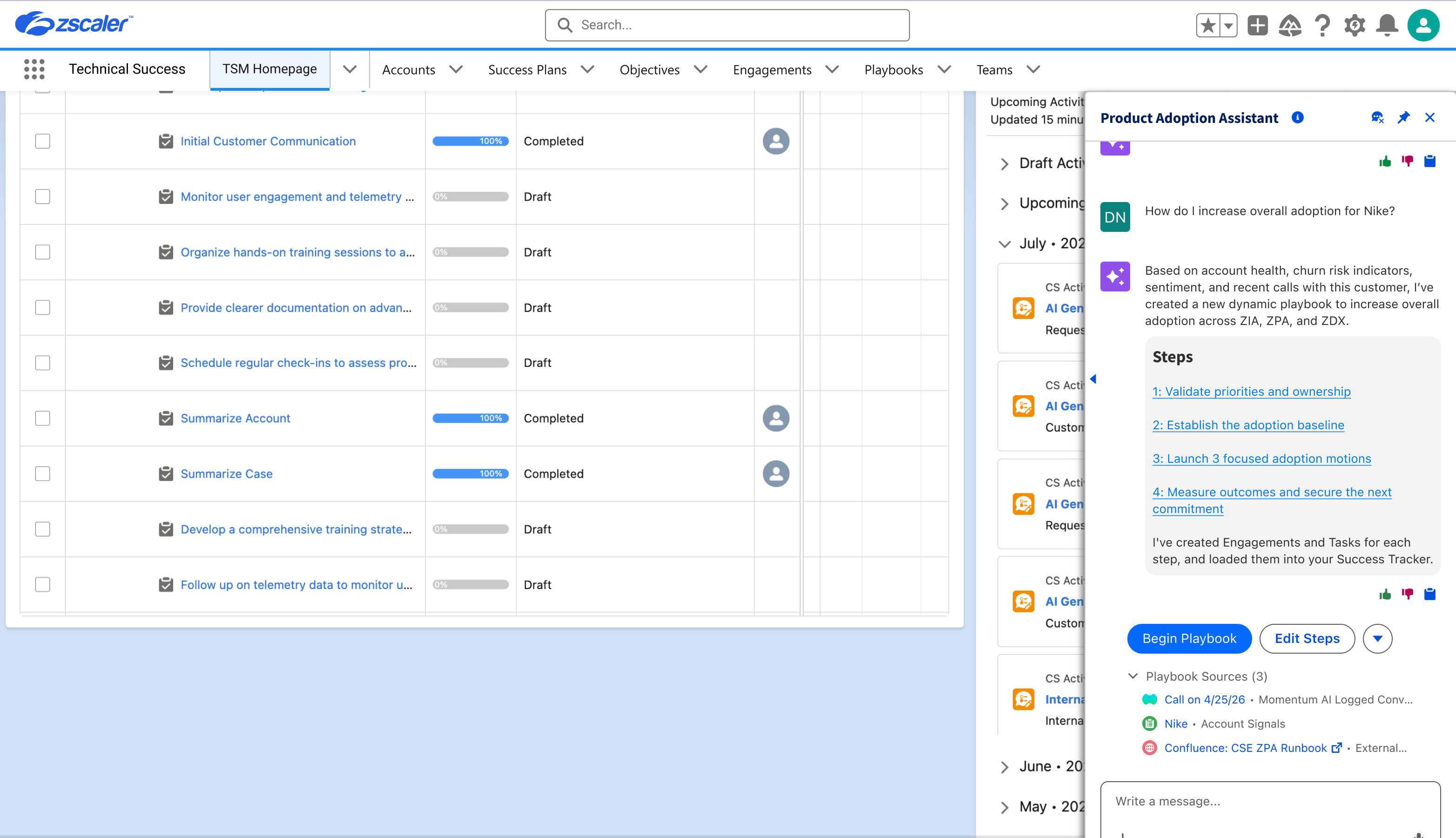
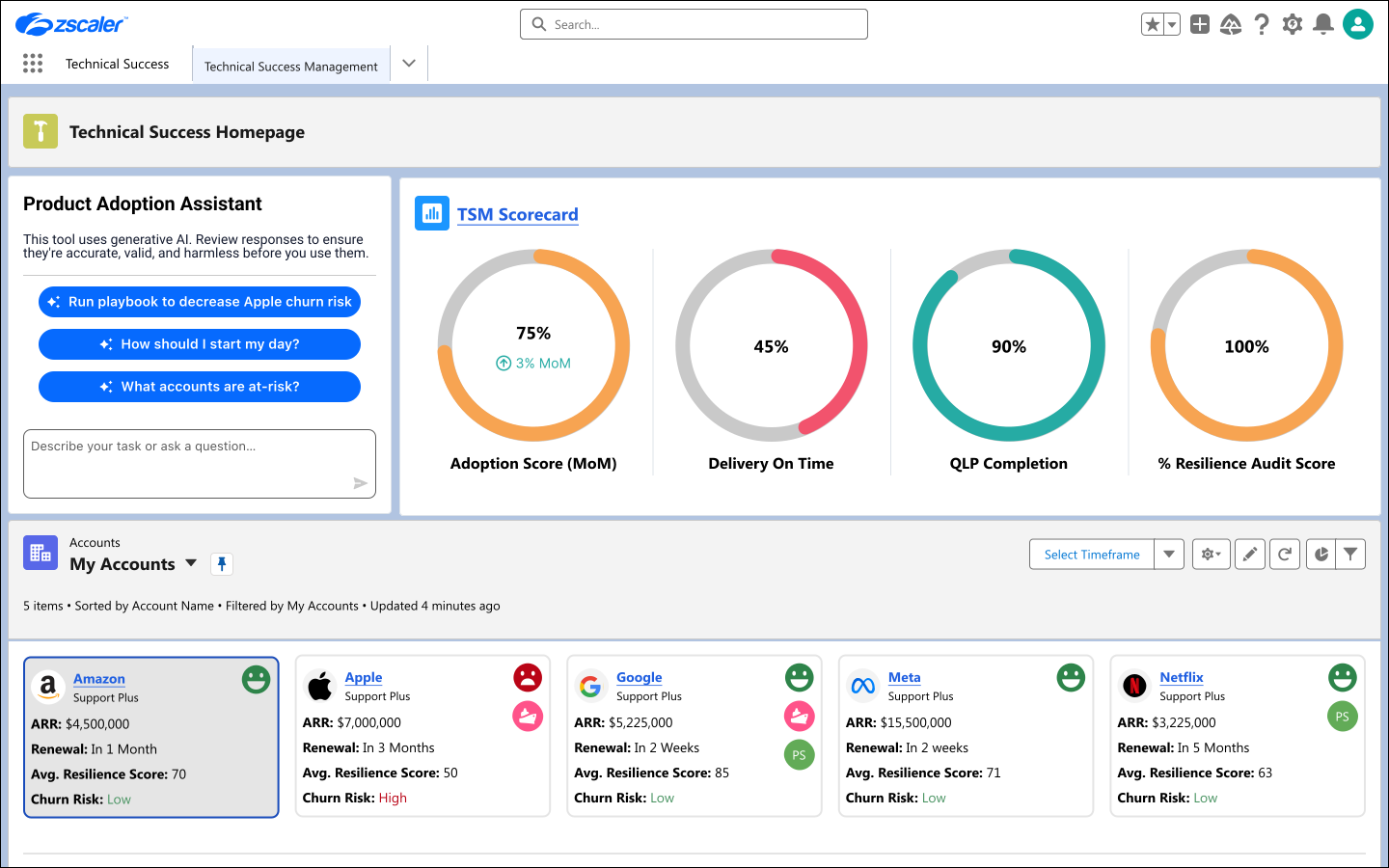
- 4Redesign the TSM WorkspaceRebuilt the Salesforce experience around research, testing, and iterative user feedback, giving former CSMs and TAMs a coherent workspace for operating as a unified TSM organization.
Key Decisions
- 1Recover Trust in PublicRebuilt governance and stakeholder confidence through visible recurring forums instead of attempting to solve the technical problems quietly before reengaging the business.
- 2Stabilize Before ReplacingChose to repair the existing experience before beginning an internal replacement, giving users a workable platform while the longer-term product strategy developed.
- 2Balance Process and TechnologyRejected the idea that either the new process or the existing system should dictate the complete solution. Redesigned both toward a workable operating model.
- 2Reduce Customization PragmaticallyMoved away from unnecessary bespoke Salesforce development without imposing a rigid no-customization rule. Retained customization where the TSM workflow genuinely required it and used stock Certinia or Salesforce components where they improved scalability and serviceability.
- 2Prioritize the Employee ExperienceTreated usability and employee trust as transformation requirements, not secondary change-management concerns after the technical implementation.
- 3Replace Certinia InternallyMade the product decision to retire Certinia after determining that its limited contribution to the workspace did not justify the cost or architectural constraints. Secured the necessary IT-leadership and C-suite support for the replacement strategy and eventual nonrenewal.
Impact
- 1The Transformation RecoveredPulled the systems workstream out of an eight-week post-launch crisis, stabilized the platform, and restored confidence among users and business stakeholders.
- 2One Technical Success Experience EmergedConsolidated multiple systems into a single Salesforce workspace supporting the transition of former CSMs and TAMs into a unified TSM organization.
- 2Time Returned and Capacity DoubledThe consolidated workspace and redesigned workflows contributed to approximately eight hours saved per TSM each week while enabling the broader operating-model transformation that increased measured account coverage from five to ten accounts per TSM.
- 2Annual Savings Were RealizedThe broader Post-Sales transformation generated $3.5 million in realized annual savings, with the unified Technical Success workspace serving as a key systems enabler.
- 3Platform Quality ImprovedReduced system defects nearly 80% and enhancement requests approximately 60% following the post-launch redesign and stabilization.
Lessons Learned
Transformations fail when process, product experience, and technology are treated as independent workstreams. The recovery succeeded because we stopped asking whether the system should conform to the process or the process should conform to the system. We redesigned both around the people responsible for serving customers.
The operating-model transformation created the destination. The product recovery made it viable.